Where do we go from here?

In Rebecca Yarros’ Iron Flame, to graduate from war school, students must climb a steep obstacle course, and keep going even as they see their peers and friends fall to their deaths or be burned to a crisp by dragons.
One character, Quinn, says, “Don’t get too close to the first-years, especially not until Threshing tells you how many of them might actually be worth getting to know.”
Another character, Rhiannon, expresses frustration about the obstacle course, the Gauntlet, calling it “pointless.”
But the protagonist, Violet, pushes back. She claims such tests have their place, and expresses morbid gratitude for their war school’s horrendous training program:
“Yes, it’s awful that Aurelie fell. That she died. But I think I’m a better rider for having been there, having watched her fall to her death and known that if I didn’t get my ass moving, I was going to be next.”
“That’s… horrible.” Rhiannon’s lips part, and she looks at me like she’s never seen me before.
“So is everything waiting out there for us.” I swing my arms out. “That stupid fucking Gauntlet isn’t just about physically climbing it. It’s about overcoming the fear that we can’t. It’s about climbing after we see it kill our friends.”
Rebecca Yarros is often compared to Suzanne Collins (The Hunger Games). Both women are American, and both write of societies built to destroy people like them for being poor, different, weak or vulnerable. But while Katniss Everdeen recognizes that the society she’s in is a horrible one that needs an overhaul, Yarros’ Violet Sorrengail desperately wants to meet the unreasonable standards of the horrible system she’s in. She fights through the pain, refuses to back down even when her bones are broken, and believes that it’s all worth it, making her stronger.
In that, she bears a strong resemblance to R. F. Kuang’s Alice Law. Katabasis isn’t just about a woman journeying to the underworld to get a referral from a dead professor, it’s about her genuinely believing that said professor’s abuses were necessary, and made her a better magician.
The difference is, R. F. Kuang has enough cross-cultural context to recognize this line of thinking as bullshit. Such gaslighting is how imperialists and capitalists justify their exploitation, setting standards that are impossible to meet. My Economics teacher in high school once told me, “If you’re not successful in America, it’s your own damn fault. You’re supposed to pull yourself up by your own bootstraps, which is inherently impossible.” Alice Law has internalized a similar narrative, that of the Oxbridge academic, which means she holds herself to a standard that might actually kill her.
As those in power attempt to rewrite history, painting a murder in broad daylight as a “tragedy of her own making,” calling a wife and mother of three a domestic terrorist, and erasing her grieving wife from the story entirely, we must hold onto the truth – a society that guns down its people unless they meet impossible standards is inherently broken.
Thinking of you, Minneapolis:

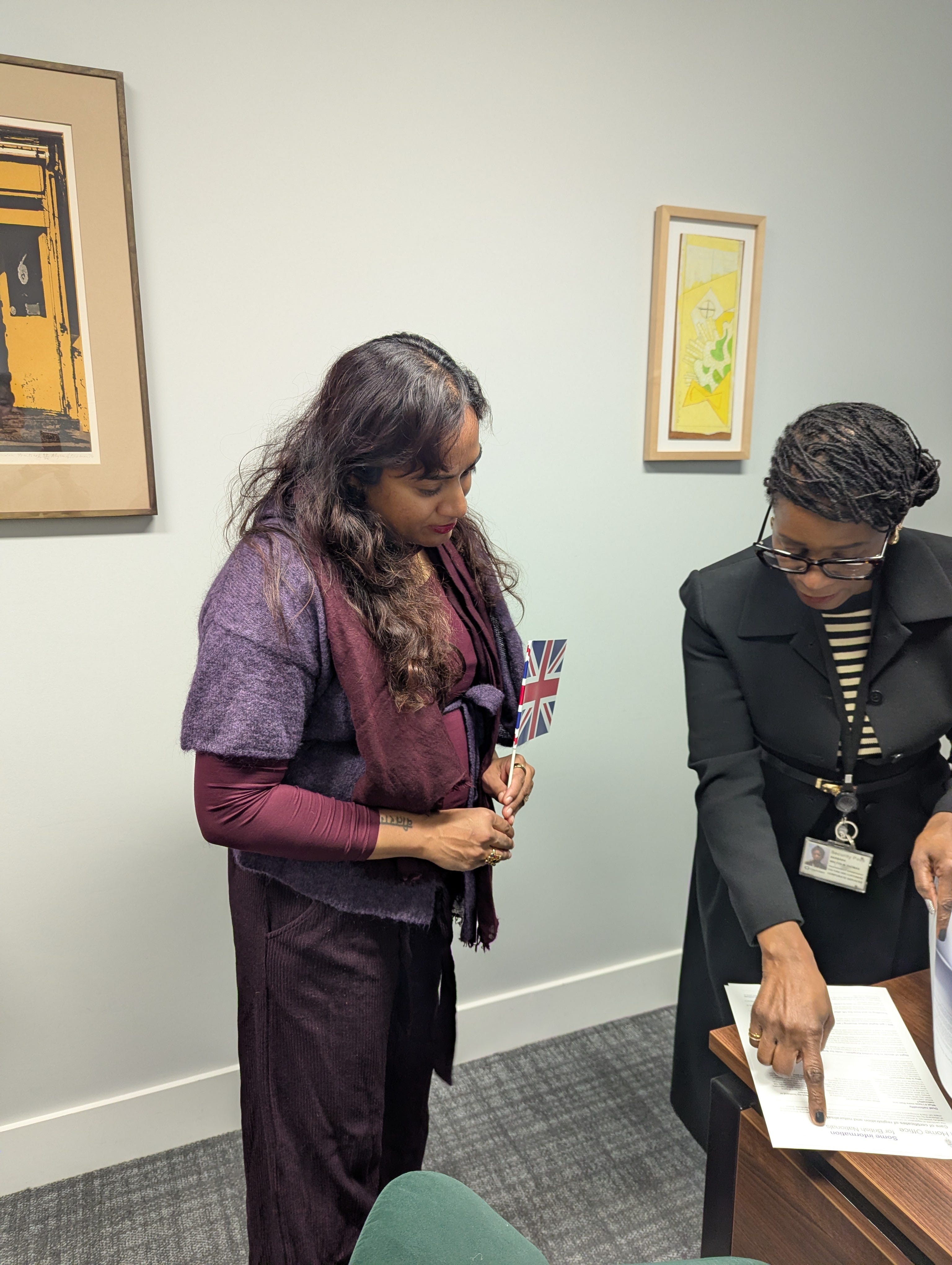
Yesterday, I became a citizen of the U.K. When I left the U.S. in 2017, I was warned about the financial hit. My pay would be docked by at least 20%, while my taxes would rise to nearly 50%. There would be fewer career opportunities so far away from Silicon Valley, and executives wouldn’t want to rely on someone who slept while they worked. I left anyway.
Then, in 2023 and 2024, as layoffs swept the valley, the lie was exposed. People who worked 80-100 hours a week were still let go, often without even the courtesy of a conversation. The narratives filled the news: they were low performers, they resisted the AI transformation, they got on the wrong side of someone senior, etc.
This is why it’s important to know where your red lines are, well before you come up on them. Your red line may not be where someone else’s red line is, and that’s important to know too – a friend of mine said that hers would come up if Zohran Mamdani failed to get elected. Another friend found hers when she was asked to fire her high-performing team.
Dystopian fiction, including The Hunger Games and Fourth Wing and Katabasis, is about taking protagonists to their red lines and forcing them to trip. In some ways, Her Golden Coast is also dystopian fiction, because I took Mal and Laurie to my own red line. Leaving California gave me enough distance to recognize it.
But I’d like to move beyond the individual Hero’s Journey, to get to what it takes to actually change society and its values, so that individual suffering and success are no longer the narrative thrust of the story. In her collection of solarpunk short stories, Futures to Live By, the writer Ana Sun writes of a world in the aftermath of climate disaster, and yet the stories are permeated by hope, community and ingenuity. (Here’s a great review of the book).
Onward then, to write. Not to accurately mirror the broken and flawed societies we live in or to portray individual heroes and martyrs, but to drive enough protagonists to trip over their red lines and recognize the need for collective, systemic change.
The U.K. isn’t perfect, but I do love the seriousness with which Barbara swore me in as a citizen, with all the solemnity of social responsibility:
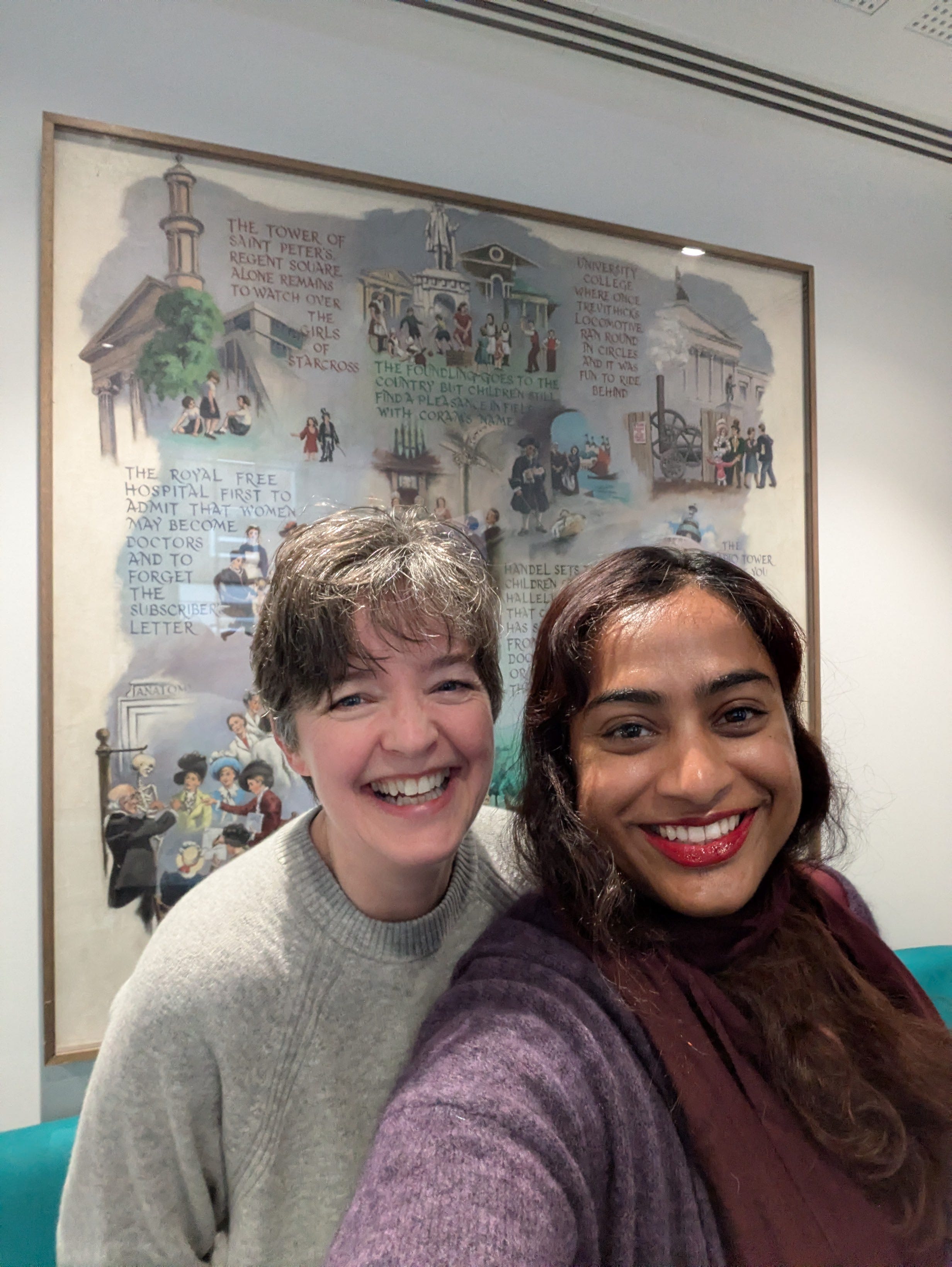
I also love that the Town Hall where I was sworn in has the following picture displayed prominently, outlining the establishment of orphanages, schools, community services, and the induction of women into the medical profession. Even if a society fails to live up to its values and ambitions, knowing they align in spirit with your own is important if you intend to make a home there.
Onward together then.