The Road Less Blockaded

According to the internet, Malala Yousafzai is 5’ 3” – the same height as me. In person, she seems tiny and yet, it’s that very smallness that makes you realize how enormous her impact actually is. In her latest book, she wants us to see her as an ordinary woman, not the saint-child-martyr that she seems on her Wikipedia page. Just another young woman with what should be ordinary dreams – graduate with a degree, make friends, dance the night away, find love, live a life.
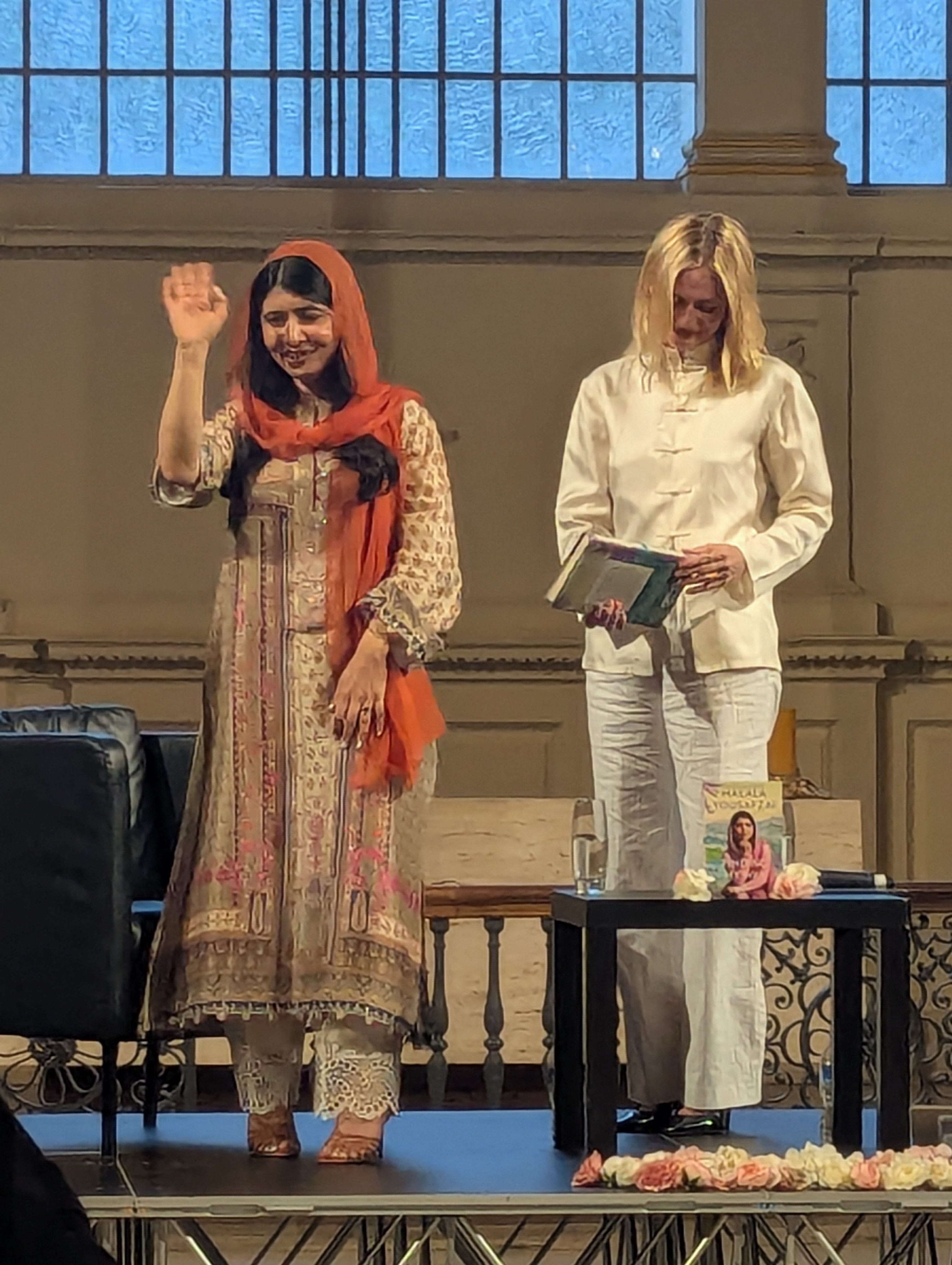
In many ways, Malala is that ordinary young woman. Well-spoken, but not extraordinarily eloquent. A gossip, by her own description. Someone proud of how many squats she can do in the gym. She talks about how soon she’ll be old. At thirty! It’s that very ordinariness that’s a miracle, a life reclaimed by someone who was shot in the head by the Taliban, received a Nobel Peace Prize before she turned eighteen, and regularly talks to global leaders.
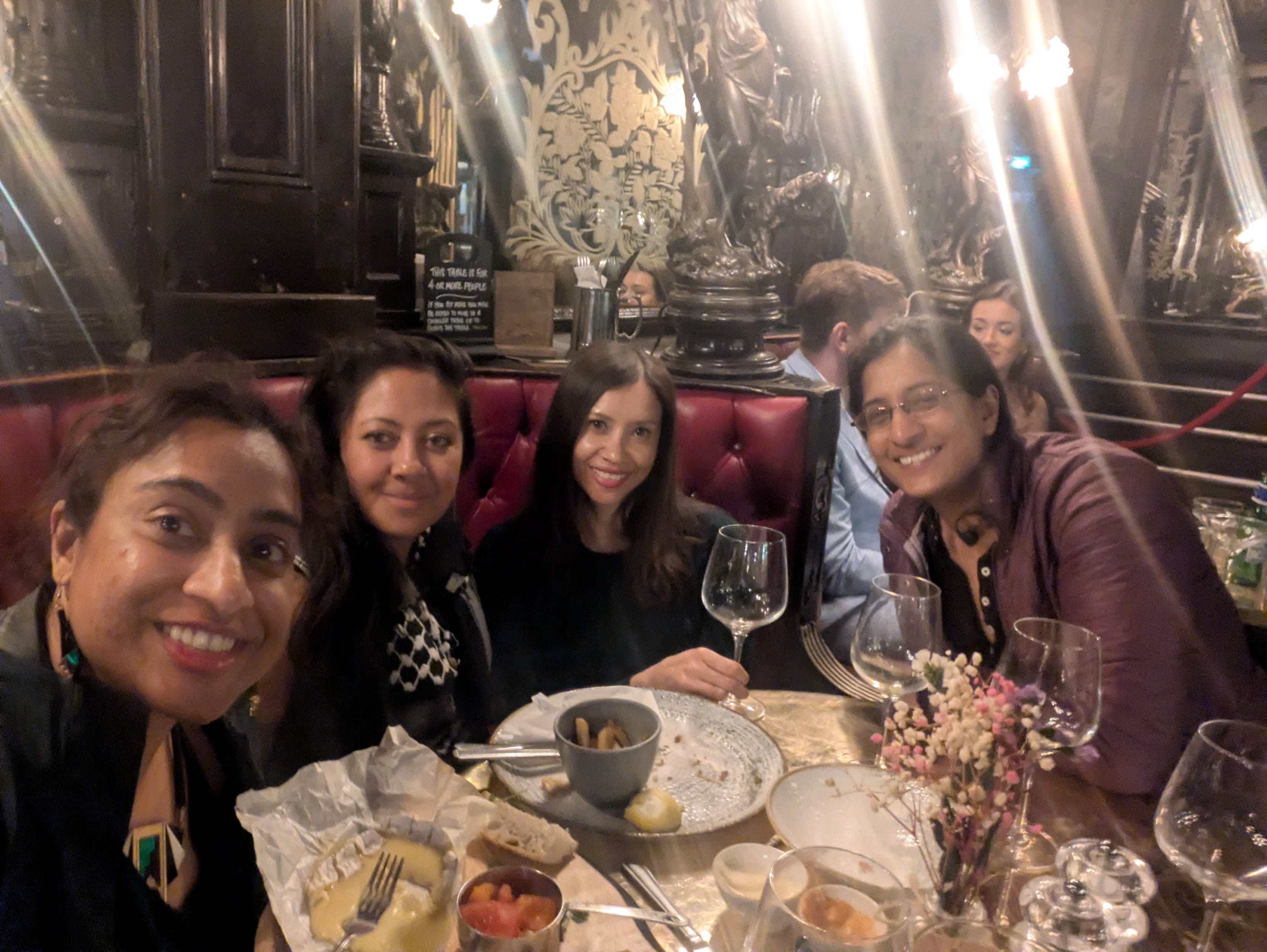
A few weeks ago, I talked to my niece and nephew about gender equity. My nephew, 12, doesn’t see how there’s any connection between the girls who are sold into slavery, or married off as children, or forbidden from pursuing an education, and his sister, who knew what a Phillips screwdriver was before she was two years old, and builds robots for fun. But among the four brown women who went to see Malala last week, what stood out was how close we came to being among the women who got left behind.
In fanfiction, there’s a trope called Canon Divergence, where the writer explores how the story might have changed if there was one small alteration: a character picks up the phone instead of missing the critical phone call; a character chooses to take the train somewhere instead of driving (and so doesn’t die in a car crash), the bullet hits somewhere less or more critical, etc.
Our lives differ from Malala’s so slightly: she was born in Swat Valley, which happened to be taken over by the Taliban. I was born 1540 miles away from there, which is the equivalent of being born in Chicago, Illinois instead of Las Vegas, Nevada. Her father has written his own book about becoming an activist for women’s education when he was the one educated man among five sisters. My father moved us out of Saudi Arabia when women’s education was shut down after the Gulf War. Among the other women in our crew, the smallest things shaped the course of our lives: a religion accepted or refused, avoiding an arranged marriage, divorcing a husband despite social pressure, having or not having a supportive parent, etc.
What stood out instead was how similar we were. All of us writers, storytellers, hungry learners. Book people. How each of us took steps to be ourselves even when it would have been so much easier to be what others wanted us to be. How carefully we each practice this gathering of the self, like a flimsy parka, through our actions, our choices, and above all our words. We write ourselves into being.
There’s another trope in fanfiction – the Mary Sue.
...the self-insert character, defined as a literary device in which a fictional character represents the author of the piece and is usually an idealized character within the fiction, either overtly or in disguise...
Classical literature is filled with characters who are inserted to be idealized versions of the author’s perfect protagonist.
People often ask me how autobiographical my novels are. Is Leena Hadi based on me? She dresses to pass as a boy, as I used to in Saudi Arabia to evade the religious police. But she’s Muslim, and I’m not. Are her emotions mine? Some of them – her anger, her love for the desert, her deep friendships with other women, for sure. But she’s a road not taken. A canon divergence. Her father doesn’t take her away from Saudi Arabia so she can go to college. He’s just a little bit selfish, enough to value his own freedom of speech more than his daughter’s rights. He ends up in jail, and Leena’s life is suddenly a lot harder than mine ever was.
What about Malini, in Her Golden Coast? If she’d been the protagonist, she’d probably have been a Mary Sue. I wish I’d had her courage at her age. To run away from home. To speak her mind. To walk away from toxic situations and go after what she wants. If listening to Malala talk was a constant trigger of “There but for the grace of the gods I don’t believe in go I,” writing Malini was a constant catharsis of “There I’d go if only I had the guts.”
And those who were at the book launch for Algorithms of Betrayal already heard from the real-life Amy how closely she resembled her namesake in the book, and how, although I’m neither a man nor half-Polish, I could very easily be Ryan Archaki. All it would have taken was a single canon divergence.
I’m not quite Flaubert-levels of “Madame Bovary, c’est moi” when it comes to my characters, but I do see myself in every one of them, and not just the protagonists. There are plenty of studies that show that reading fiction improves empathy, allows us to see ourselves in others and elements of others in ourselves.
Which is exactly why the first thing that tyrants do, from Trump to the Taliban, is restrict access to books. The greatest resistance to tyranny is an open, curious mind. As a reader and writer, this means letting yourself explore those canon divergences fearlessly. What if you’d made that one decision differently as a kid? What if you had your friend’s father as your own instead? What if you were exactly who you were, but born in Afghanistan instead?
I’m feeling empathetic. Off to read, and write. Because, thankfully, I can.
Inspiring and humbling. I remember giving my children Malala Yousafzai's memoir to read so they would not take their cosy English village primary school for granted. (When they were complaining about having to go to school!) It made a lasting impression.
'Canon Divergence' I haven't heard that term before, but it's so true. Whether it's race, gender, health, geography, parents... One step different and each of us would be on a very different path