Sisterhood vs. Silence

Those who came to the launch of Algorithms of Betrayal know that the character of Amy Messori is an amalgam of several powerful women in tech, including one who happens to actually be named Amy. This week, an article about women in cybersecurity began making the rounds. I opened it eagerly, and left it feeling disappointed. The women, who all seem to be white, speak of the same challenges that used to exist 10 years ago, when I wrote The Divine Comedy of the Tech Sisterhood – being isolated as peers leave the industry, feeling devalued by working conditions and lower pay, and aching for some sort of – dare I say it – sisterhood that would help them and the next generation.
Has nothing changed?
Then I read this Substack post by Bernadine Evaristo, about a true sisterhood that already existed as long ago as the 1960s, one that fundamentally changed the face of literature and society:
a group of African American women writers calling themselves, The Sisterhood, met in their New York apartments in the late Seventies to create a space for black women to discuss literature and liberation. The names of those who attended include Alice Walker, Toni Morrison, June Jordan, Audre Lorde, Paule Marshall, Margo Jefferson, Ntozake Shange and Rosa Guy. This inspirational group of women, many of whom went on to become legendary figures in American and global literature, fought for the rights of black women writers in publishing, culture and the academy and helped lay the groundwork for the numerous courses where black women’s writing is taught in the USA and elsewhere today. I simply had no idea that these incredible women once knew each other so well, and organised in this way to transform their society.
The whole post is worth reading in its entirety, but what struck me was how Bernadine effortlessly does something that the women in the cybersecurity post seem unable to: lift others’ voices as soon as they themselves are in the spotlight. This subtle sharing of power does something that even the grouping of seven C-suite women on a single page doesn’t do: it says, “We are legion. You cannot silence all of us.”
Many women succeed as individuals through sheer competence. Yes, they have to work twice as hard for half as much, and the women in that cyber-security post deserve accolades and praise. But it takes a completely different skillset to move from individual competence to collective power. And it’s the latter that truly matters.
Here are some key differences I’ve seen in those who have those skills:
They share the spotlight, immediately and without conditions.
Give them praise, and they immediately tell you who else contributed to that success. Tell them you love their book, and they say, You should read XX other author if you like that; they’re the expert that influenced me. Invite them to speak at a conference, and they ask, Have you already reached out to YY? Or could we both present together? They blurb and review each other’s books, and champion others’ causes.
They genuinely enjoy each other’s company, especially in shared purpose.
The relationship isn’t transactional, but a real friendship. These are people who might enjoy chatting with wine over Zoom, going for a walk together in a new city, or simply sitting at a shared table and working on their novels or creative projects. If one of them decides to start a new venture, whether it’s a startup or a Webtoon, the others show up to turn it into a shared adventure.
If you want an example of doing this right now, watch this reel to the end. (Why I love Misha Collins).
They are network-brokers, making connections between people.
Some people enjoy being the hub of the social wheel, recognizing that the connections they have are a form of wealth and power. But sharing that power is a different skill, one that requires letting go of the ego. It means matchmaking people who could form a stronger bond with each other than either of them currently has with you.
They move beyond friendship to symbiosis and mutual flourishing.
The difference between “having friends” or “networking” and actually brokering power is huge. I’m not very good at this, but this is exactly what the “old boys’ club” does so well. This article talks about Larry Ellison’s connections with Bill Gates, Elon Musk and Tony Blair, and casually references another, older, Oxford club:
The Eagle and Child, formerly owned by St John’s College, was bought by Ellison for £8m. The pub, which first opened in 1684, closed its doors in March 2020 because of the pandemic and has never reopened. Until its closure, its most famous feature was the wooden plaque in the back room, known as the Rabbit Room, commemorating the literary group known as the Inklings, which included C.S. Lewis, J.R.R. Tolkien and Charles William, who would meet there regularly to socialise and discuss their work.
While we tend to think of these people as individuals, that ignores the community power they have access to.
They create the rooms they want to be in, and invite others in.
If you read the previous bullet and wondered, “Where’s my club?” it might mean you need to create it. There is an emotional, financial and labor cost to organizing community events, book clubs, writing retreats, training materials, etc. If you’re lucky enough to meet one of the people who actually does this well, hold on tight. It’s tempting to believe you can / should go it alone, but even for something as solitary as writing, you need a community of people who believe in you, and you don’t get that unless you start believing in something bigger than yourself.
Similarly, in a corporate role, it’s always tempting to do stuff within your authority, without having to influence broadly and gain stakeholder alignment, reflecting the probably African proverb, “If you want to go fast, go alone; if you want to go far, go together." But why can’t you go far and fast and together? This is what the Amy of Algorithms of Betrayal wants more than anything. She doesn’t want more power for herself; rather, she wants the team she’s building to feel empowered. This is the quality of the real-life Amy too that inspired the book and its twist ending.
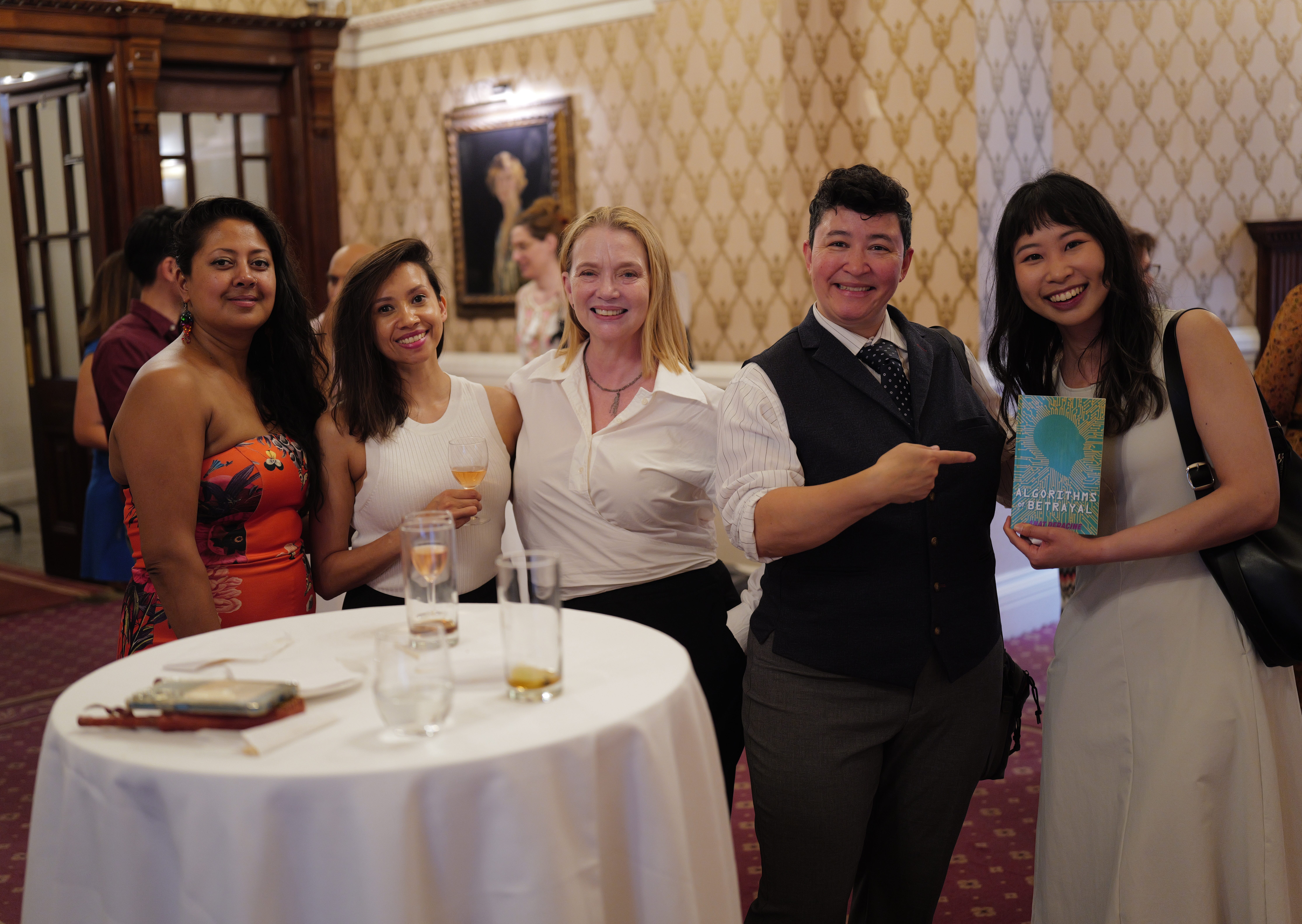
What keeps us from reaching for collective power? Sure, unless you live in the UK with active labor unions, there’s no official model for it. But mostly it comes down to fear – those of us who started out with very little money or power fear what might happen if we gave some of it away. We don’t know, for instance, if we stuck our neck out asking for a four day work-week (love this article, Hazel!) or the freedom to work remotely, we might get laid off. Immigrants especially fear getting deported if they ask for more. Even if there are viral articles about how the corporate job of the last few decades is dead, we’re unable to get past the fear of losing what we worked so hard to achieve.
I’ve been taking small steps to rid myself of the fear, giving away money or investing it in ways that share power. But there’s probably still a lot more I could do, and would love to hear from you if you have thoughts!
In the meantime, I’d like to recommend an artist, a book designer, an editor, a coach for writing and one for the workplace, a pilates teacher, and a community. Just in case y’all need some of these things. As a reminder, my offer from earlier still stands; anyone who writes a review for any of my books is welcome to a free clarity session. If you want to know first whether Phi is right for you, book a free consult.