Good Coping, Bad Writing

In my latest novel, Algorithms of Betrayal, the protagonist’s mother tells him, “Mind like yours—if you hadn’t found programming, I was sure you’d have ended up on drugs.” Her concern for Ryan Archaki is legit. He has serious anger issues. And, as he knows:
Rage, impossible for a brown man to convey outwardly, turned inward.
Get up off the floor, you useless sack of shit. What do they know? You’re the reason they even have jobs in this economy. You offered up your own job at collective consultation so the poor bastards still on visas wouldn’t get sent back to Ukraine to die.
In my case, my mother once told me something very similar, although it was books, not programming, that she credited with saving me. If not for books, I don’t think anyone can survive religious police in Saudi Arabia, multiple country moves (thanks to two wars), and a twenty-year career in the tech industry without being an absolute mess.
Whatever I’m going through, books help, whether it’s targeted non-fiction on a topic of interest (current fave: The Master and His Emissary), escapist fiction (this year’s unquestionable winner: The Apothecary Diaries), or a study in craft: tie between A Poetry Handbook, which is not actually about poetry but about mastering the power of music and language, and First you write a sentence, which may be the battle manual for the age of misinformation. Interestingly, three of these four recommendations came from Caroline Manring, so if you’re not already subscribed to her LitCafe, maybe read her latest and consider it.
At the book launch party for Algorithms of Betrayal, we were treated to an appearance by the real-life Amy, who is the model for the character Amy in the book (how cleverly hidden). We talked about the extent to which our characters accurately represent us, and she said, “You have more self-awareness than Ryan.” That self-awareness, honed by years of inner work, therapy, and executive coaching, means that at work, I’m often seen as mature and level-headed, open to even harsh feedback, and unflappable in the face of change or crisis.
That doesn’t mean I don’t feel the things others do, only that I recognize negative emotions as soon as they show up, and force my emotional immune system to kick in. Compartmentalization, reflection, systems thinking, and self-preservation combine forces to ensure that I can go through one extremely difficult meeting, dial out, and then dial right back into a new meeting with a smile on my face and focus on what’s needed there.
This wasn’t always the case. I used to stew for hours on one bad moment, catastrophizing the slightest thing that went wrong. I would drive others crazy with my perfectionism, and get really angry when things slipped out of my control. I would stress out in bed about the day’s events, unable to sleep, planning out what I could say or do the next day to fix things. And I’d send long, self-righteous, angry emails to people with a lot more power than me, to the point that it’s a miracle I didn’t get fired.
In short, I acted like a YA fantasy heroine.
Now, when I read about women like that (:cough: Fourth Wing), I find myself frustrated by them. Why don’t they calm the fuck down and stop antagonizing people who are trying to kill them? What is this death-wish that prevents them from taking a minute to think before they speak? Of course, it’s not a death-wish, but poor frontal lobe development. And not only do I not identify with their anger, I barely remember my own.
That’s not a good thing. It’s an empathy gap, one I’m working to close, both in life and in my writing. Writing Ryan Archaki was liberating, even if one reviewer said of him:
Ryan Archaki is neurospicy-coded as a brilliant, germaphobic asshole with mommy issues and whatever is the opposite of emotional intelligence.
Part of what made it easy to write Ryan was time-boxing. When I wrote Algorithms of Betrayal, I was on leave from work, with 30 days to finish the first draft. I didn’t have to worry about being so much in Ryan’s messed up headspace that I carried forward his personality into my work meetings. I wouldn’t snap at people, as Ryan does. The anti-social thoughts that go through his head wouldn’t spill over in a moment of inattention and ruin my real-life friendships. It meant I could really become Ryan, sink into his experience and point of view, and allow his backstory to color everything, not just his actions and thoughts on the page, but even the vocabulary he used, and the little tics that were his unique way of experiencing emotions.
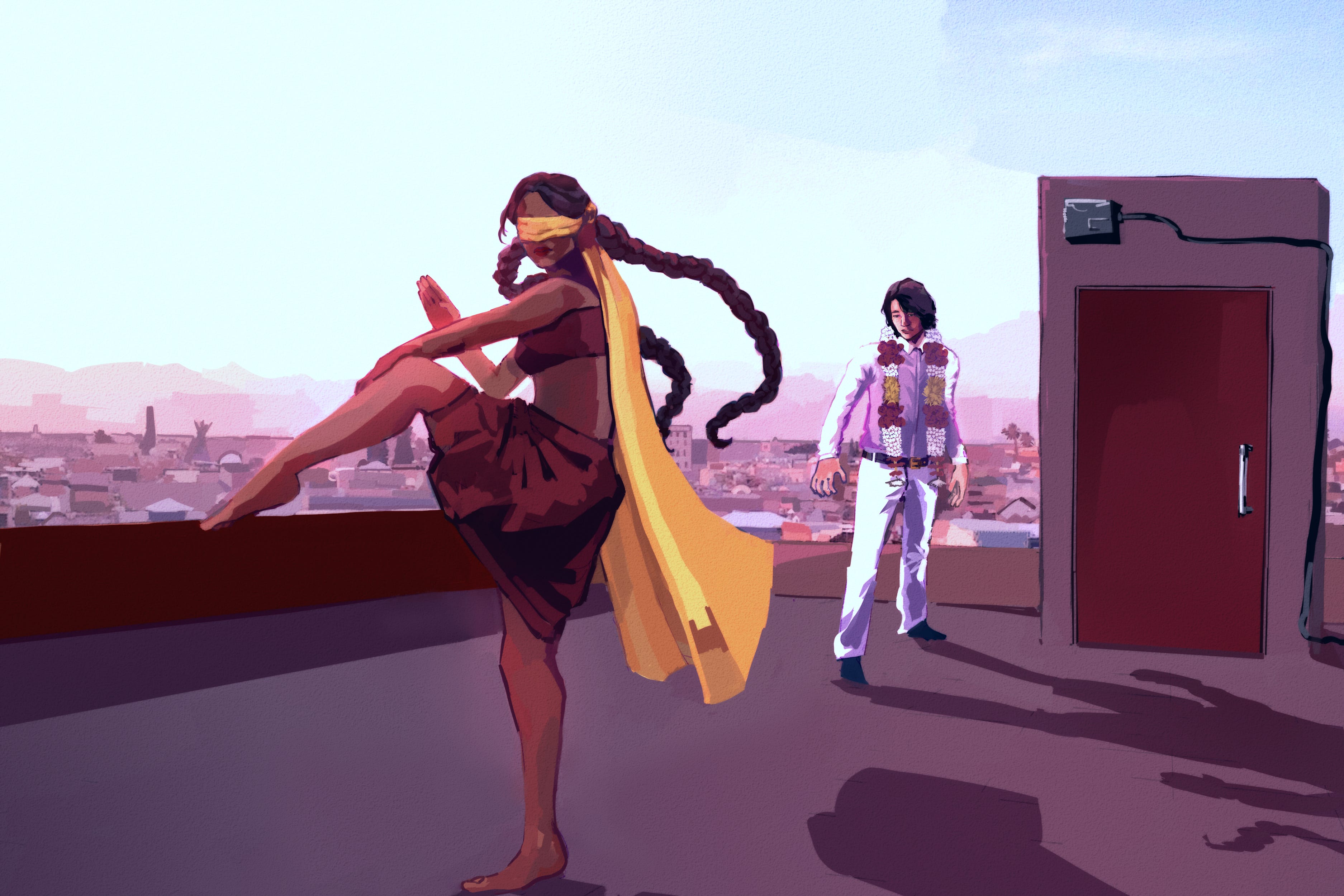
With my upcoming fantasy series, I don’t have that luxury. The character whose headspace I most need to sink into is genuinely dangerous to my career. She is feral and furious, self-destructive and uncontainable. She is all the young women inheriting a broken society and a burning planet. She is the girl I contained to get to where I am in my career, but she wants to be let out on the page. Here is a rendition of a moment from this book, by artist nikolai espera:

Despite the threat of becoming her, of reverting to the person I used to be, I’m compelled to write this story, to acknowledge female rage but find a place for it, a way to channel it into the betterment of society. That, after all, is the promise of the divine feminine, and why cults to the goddess Kali persist to this day. Here’s another moment from the book, this time a rendition of the temple goddess, by artist Mandy Mackenzie Ng:
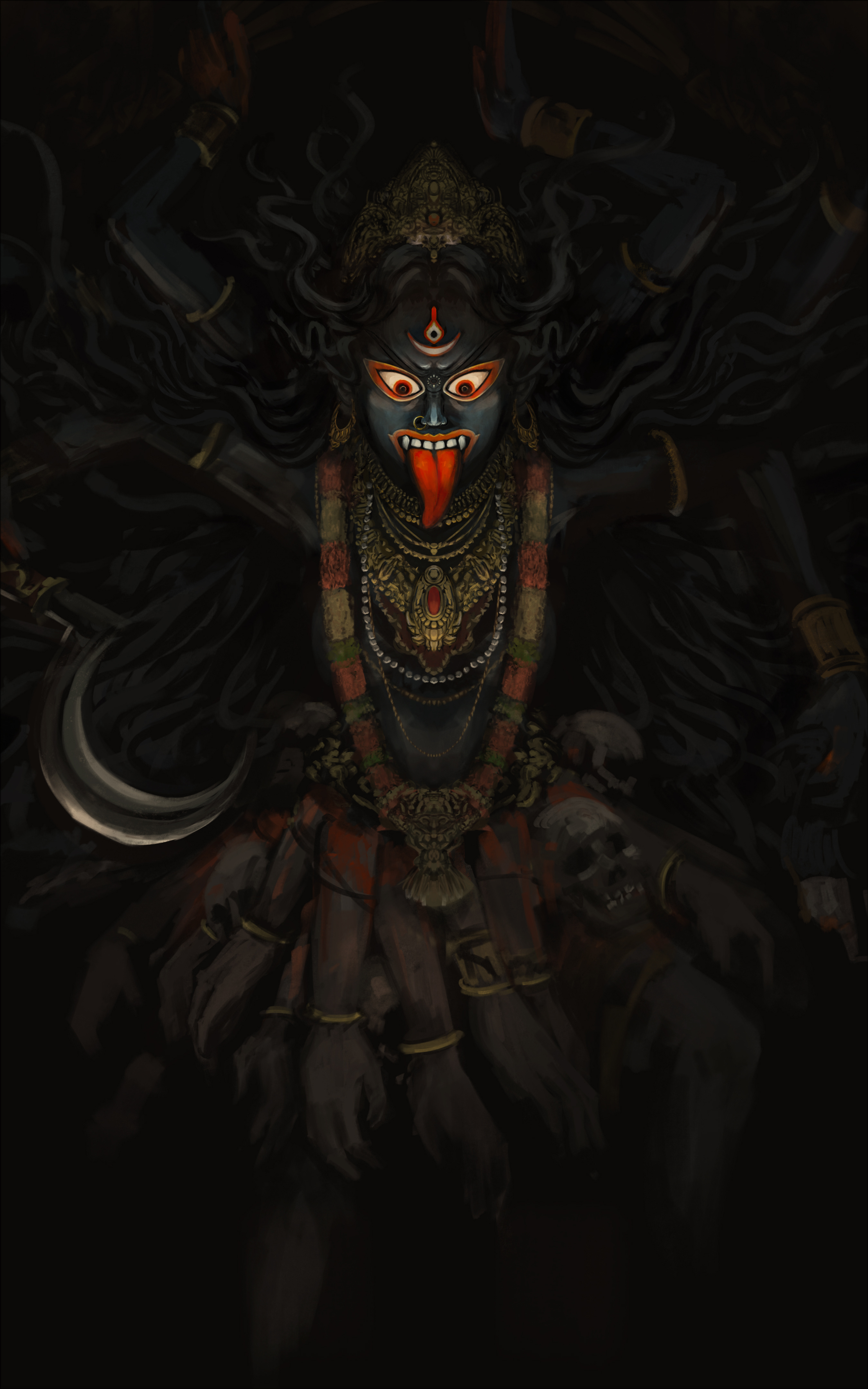
Our disconnection from the divine feminine is, at its heart, discomfort with the expression of female rage. We find Kali disturbing, rather than beautiful (although I personally think Mandy’s art is GORGEOUS). Yet, as I write, I put the reins on my character, attempt to domesticate her. I don’t allow her to express the full range of her fury. My coping skills in real-life make me restrain my character’s emotions, as if I’m worried that if she spent a night fuming about a betrayal, she’d come across as immature, and people would like her less. Fortunately, thanks to my wonderful beta readers, I now know that it is exactly in her moments of immaturity, of all-too-human pettiness, that people see themselves… and in her rage, their own liberation.